Barcelona was my home base while studying abroad- I lived in the Fort Pienc neighborhood, took classes in Placa Catalunya, and explored as much as possible every day I was there. Despite all the traveling I did when studying abroad, Barcelona remained my favorite city. I’ve missed living there every day since leaving during the covid pandemic so I couldn’t let myself book a post-grad European vacation without stopping back in, 3 years later. Not much has changed in Barcelona, except for a drastic increase in crowd size (maybe this is due to more favorable weather conditions in October versus January-March, or maybe it’s because another pandemic isn’t on the rise). It was good to be back.
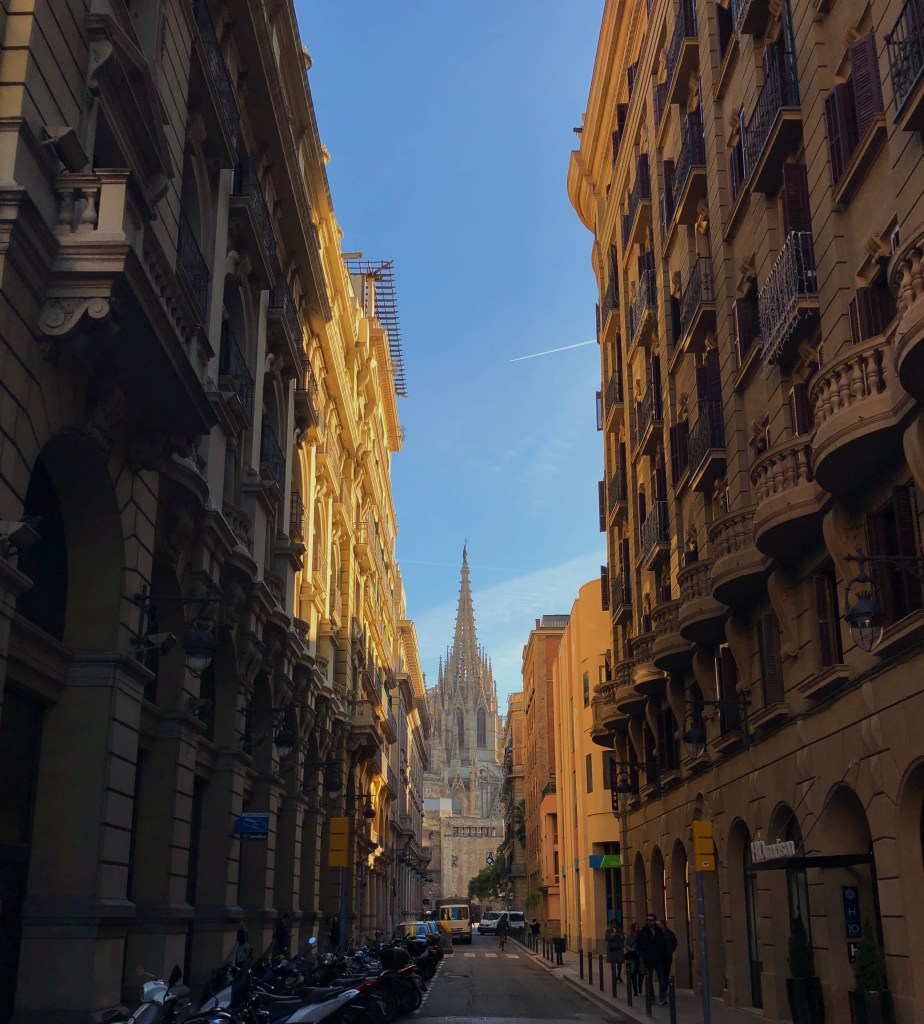
The city of Barcelona is separated into different neighborhoods. This neighborhood, for example is El Barri Gòtic, or the gothic quarter.
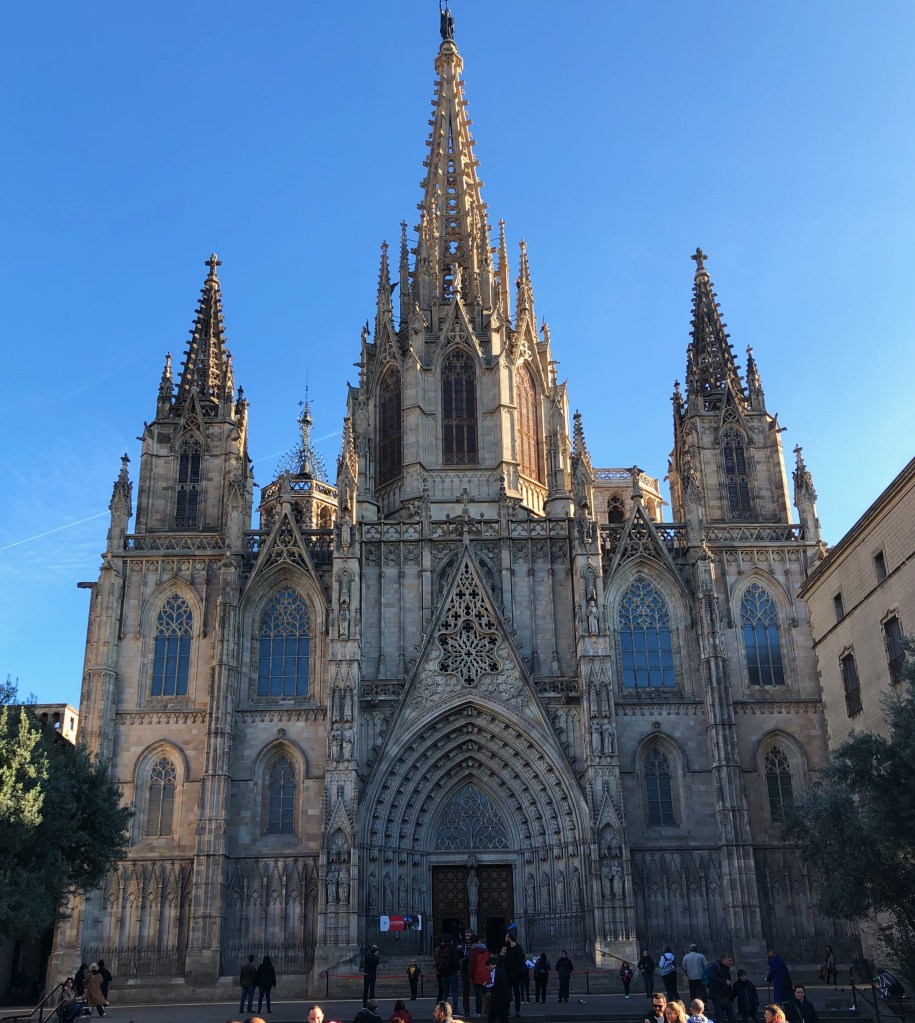
To the right and above are pictures of La Catedral de Barcelona, one of many beautiful cathedrals in this city.
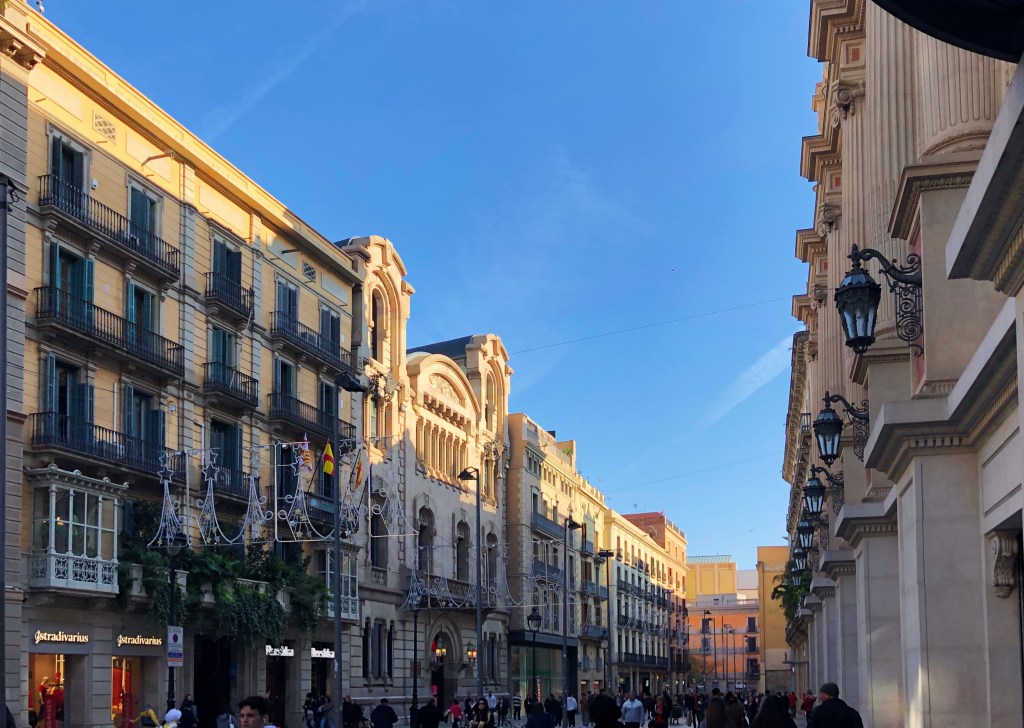
As seen on the left, the streets of El Barri Gòtic are filled with shops.
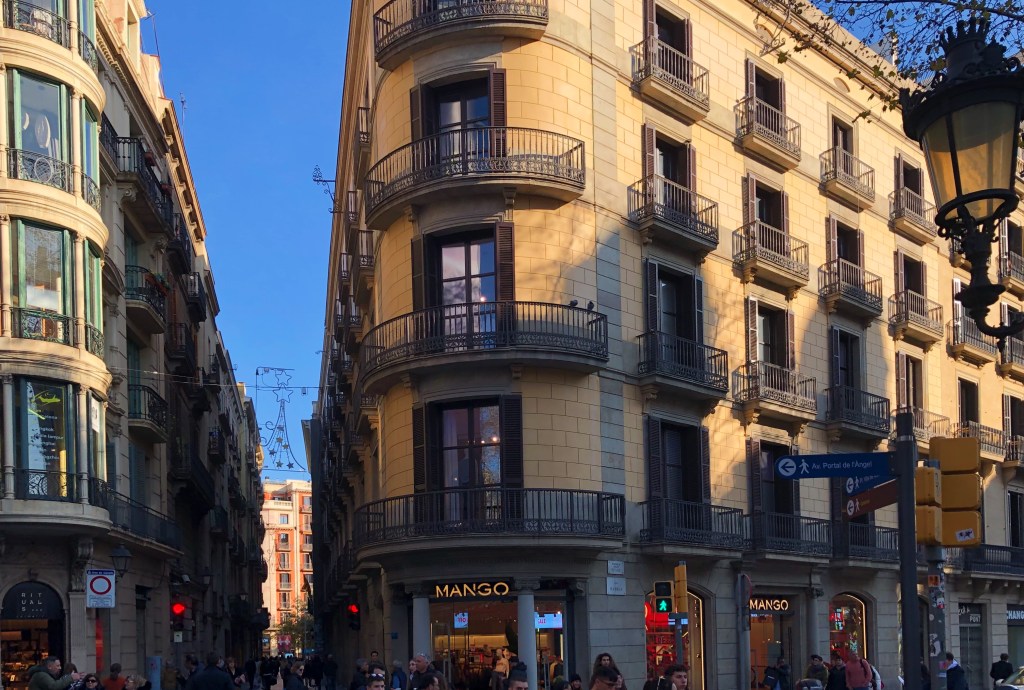
Las Ramblas, shown to the right, is a street in central Barcelona that forms one of the borders of El Barri Gòtic, separating it from El Raval. It is a very popular tourist attraction as it is known for its beautiful architecture and shops.
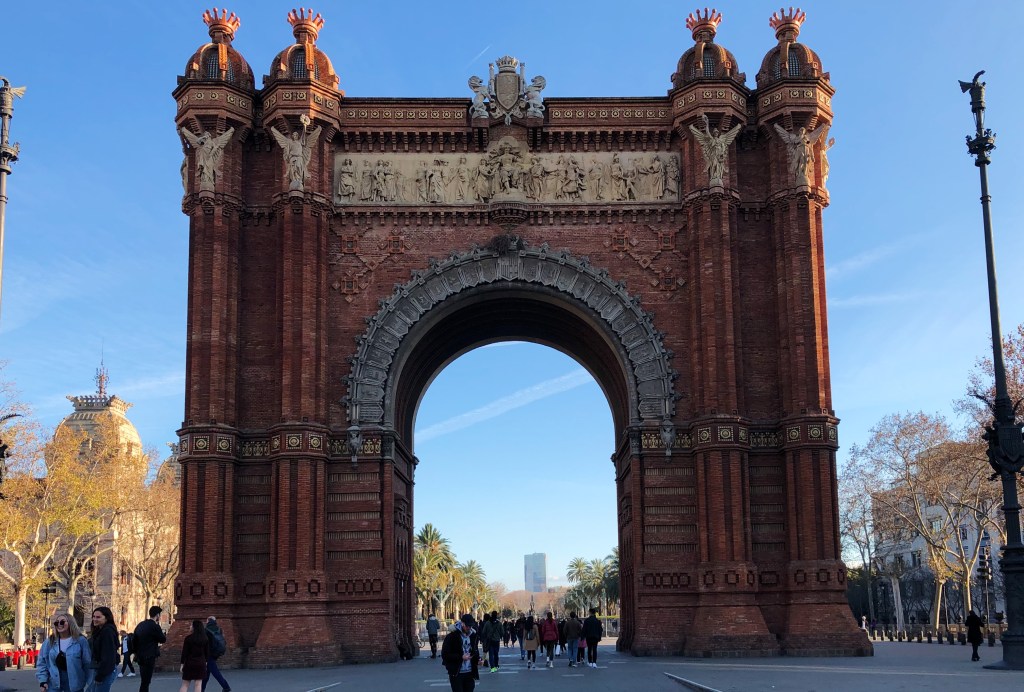
Barcelona has its own Arc de Triomf. This structure was built for the World Fair in the late 19th century to acknowledge the roles of agriculture and industry.
Park Güell is a public park to commemorate the catalan architect Antoni Gaudí i Cornet.
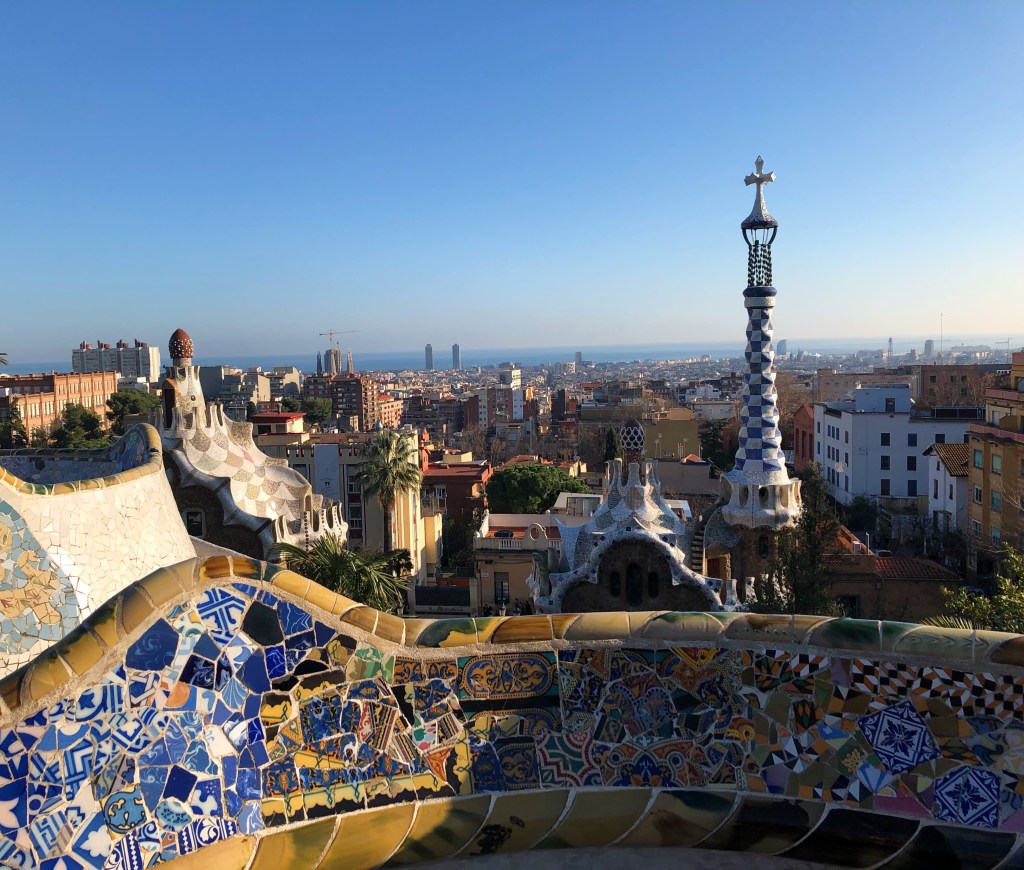
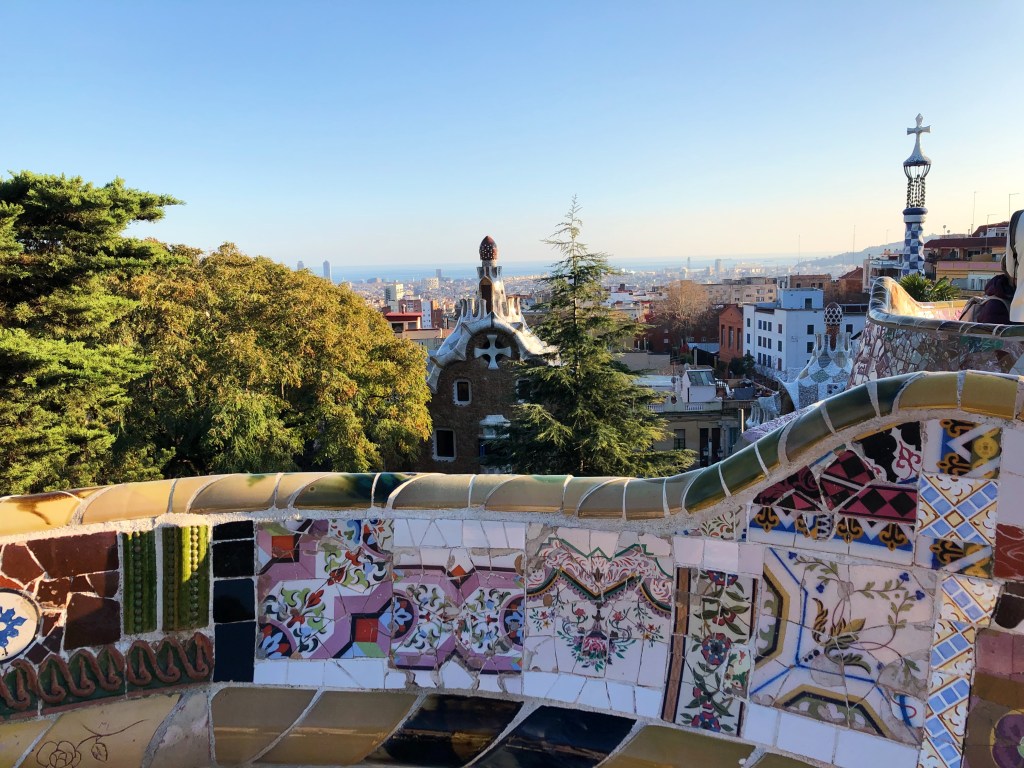
Gaudí is most famous for being a large component of the Catalan Modernism era.
While all buildings designed by Gaudí are unique, they can all be characterized by their lack of straight lines or edges.
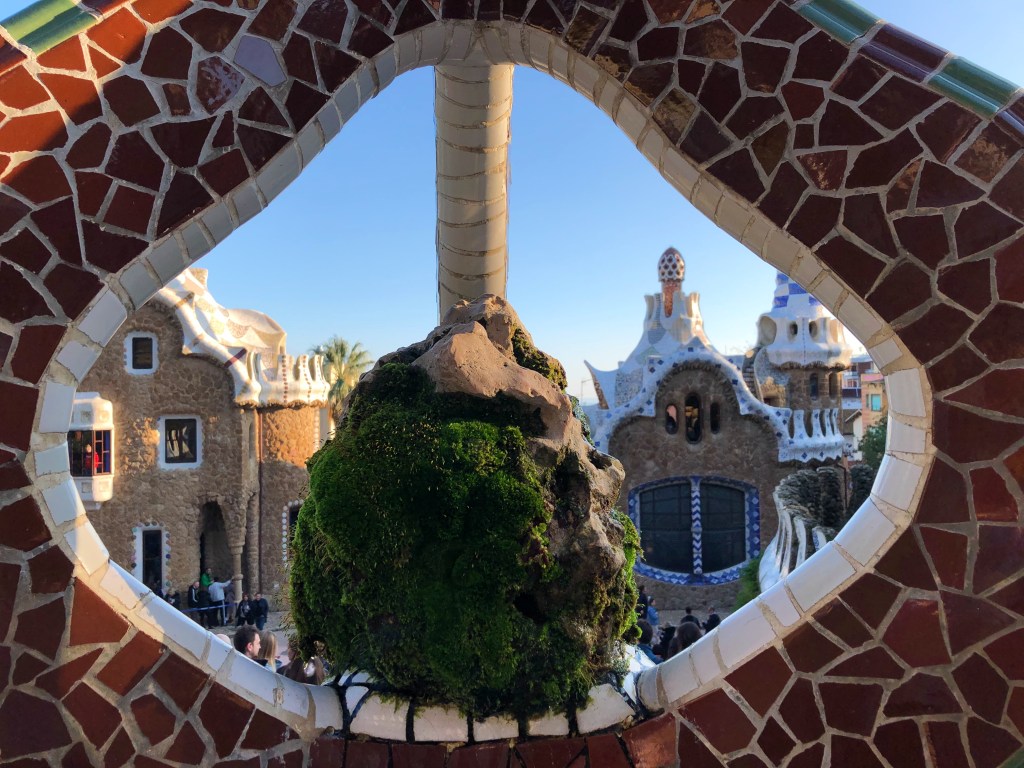
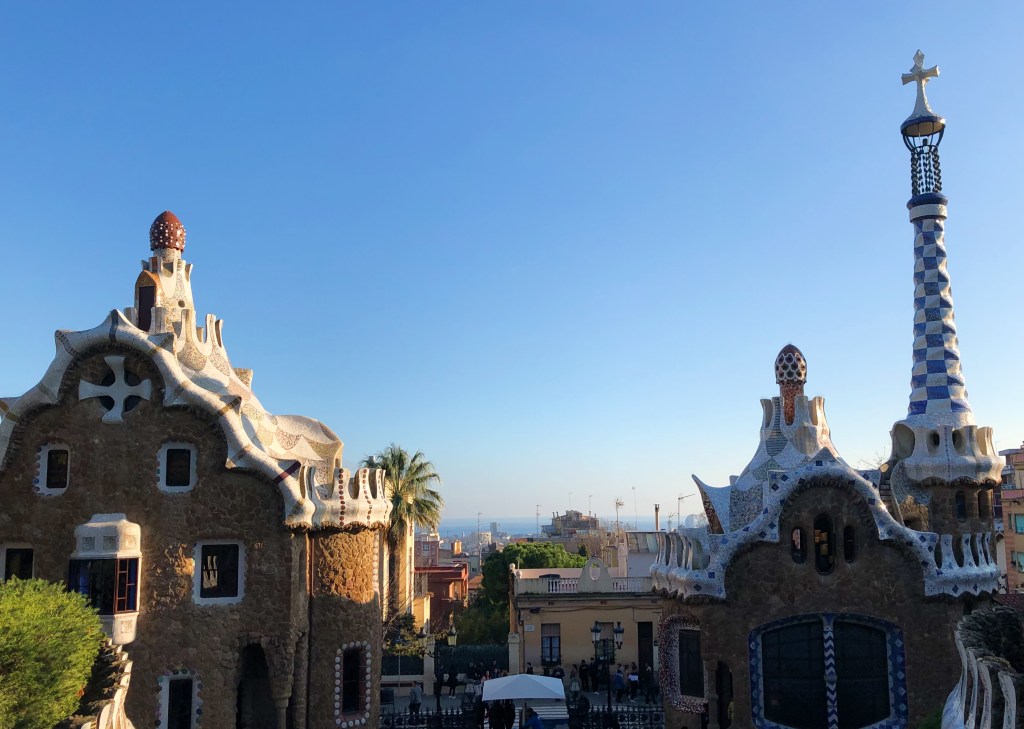
Gaudí’s architecture is strongly influenced by nature.
“There are no straight lines or sharp corners in nature. Therefore buildings must have no straight lines or sharp corners” -Gaudí
Park Güell offers amazing view of Barcelona as it is located on Carmel Hill, part of Collserola mountain range.
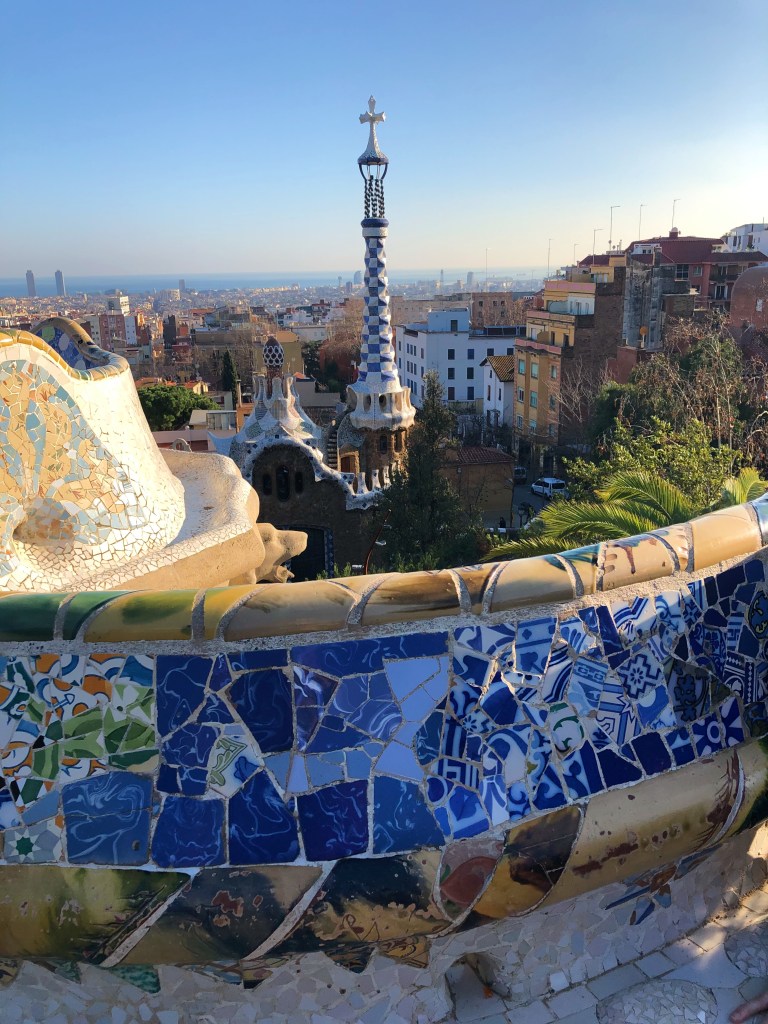
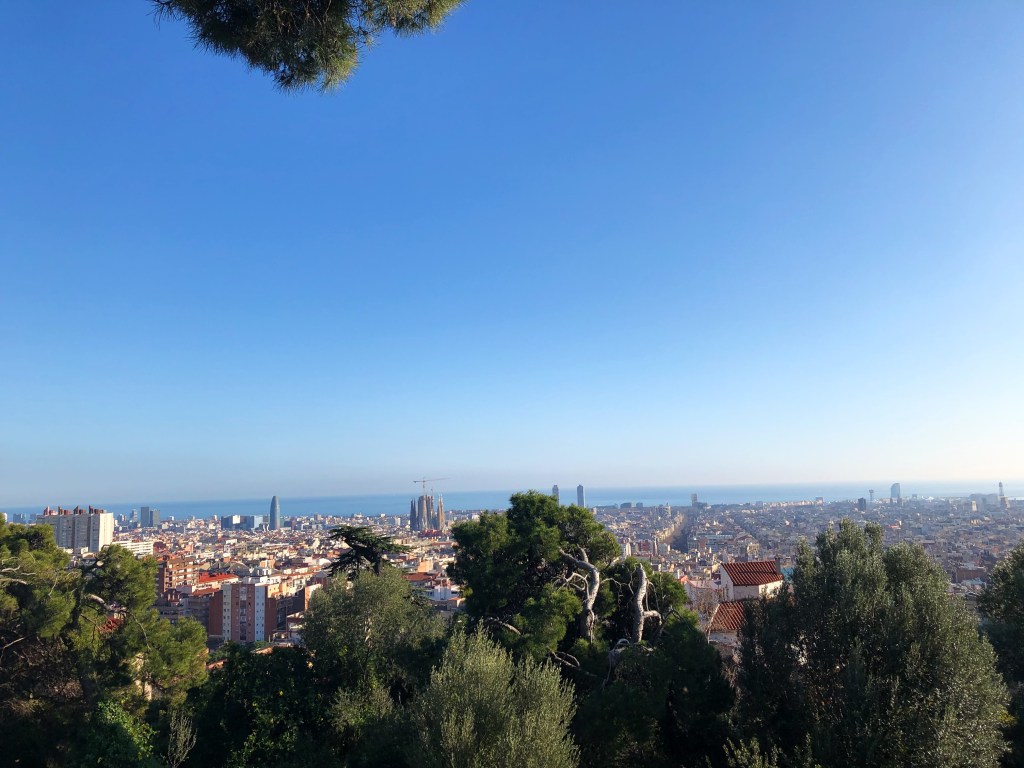
The climb up Carmel Hill shows a birds-eye view of the city. If you look close enough, you can see La Sagrada Familia, a famous cathedral designed by Gaudí. It has been under construction since 1882.
My time in Barcelona overlaps with the catalan separatist movement. The separatists argue that Catalonia should be its own independent entity.
“Okupa y resiste” means “occupy and resist”
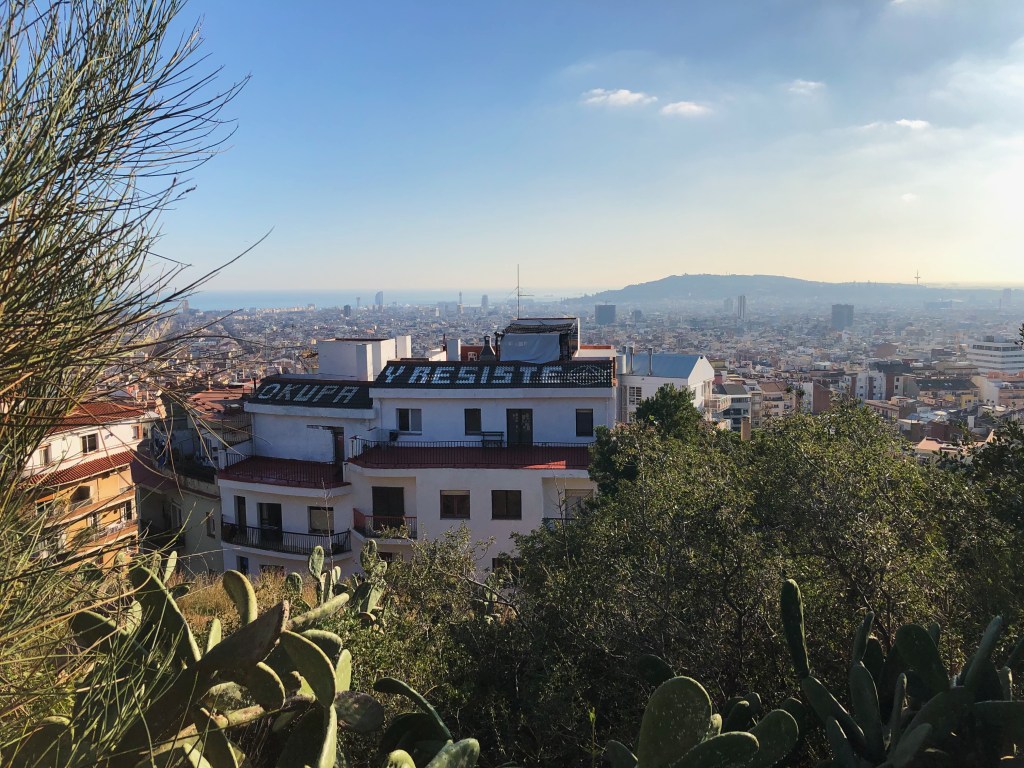
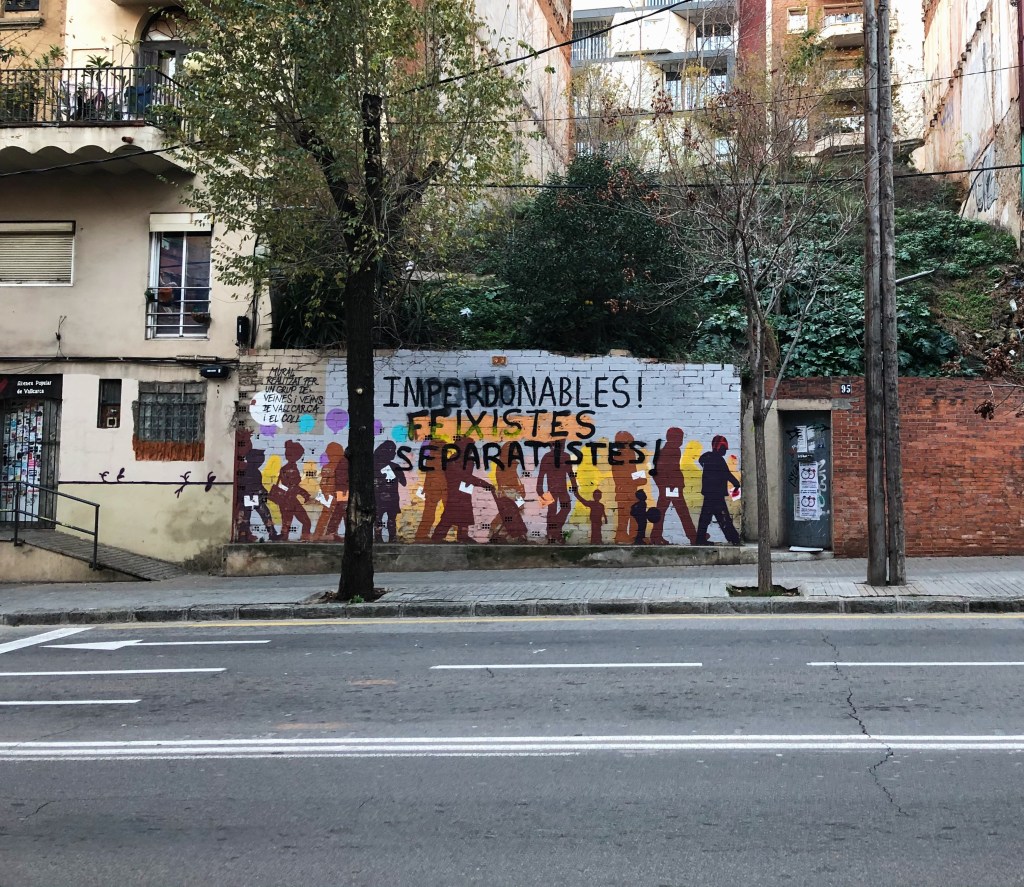
The nationalists, on the other hand, argue that Catalonia should remain a part of Spain.
“Imperdonables feixistes separatistes” means “unforgivable separatist fascists”
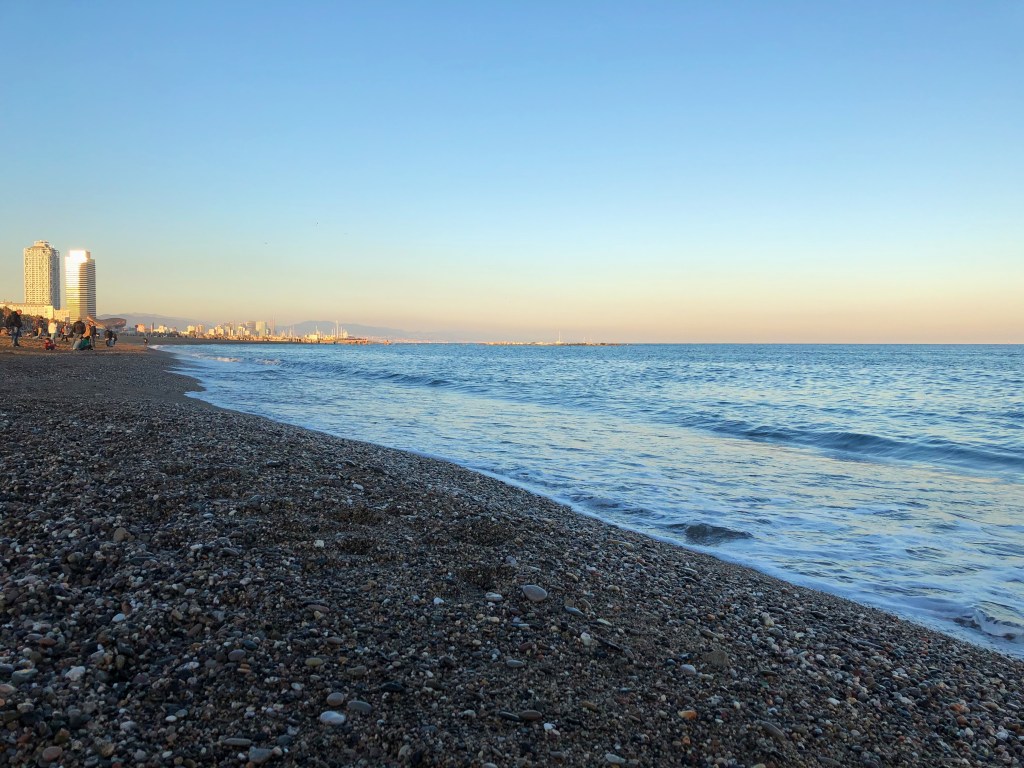
El Barrio Barceloneta is a popular coastal neighborhood in Barcelona. This area is filled with tapas bars and is one of my favorite places to run.
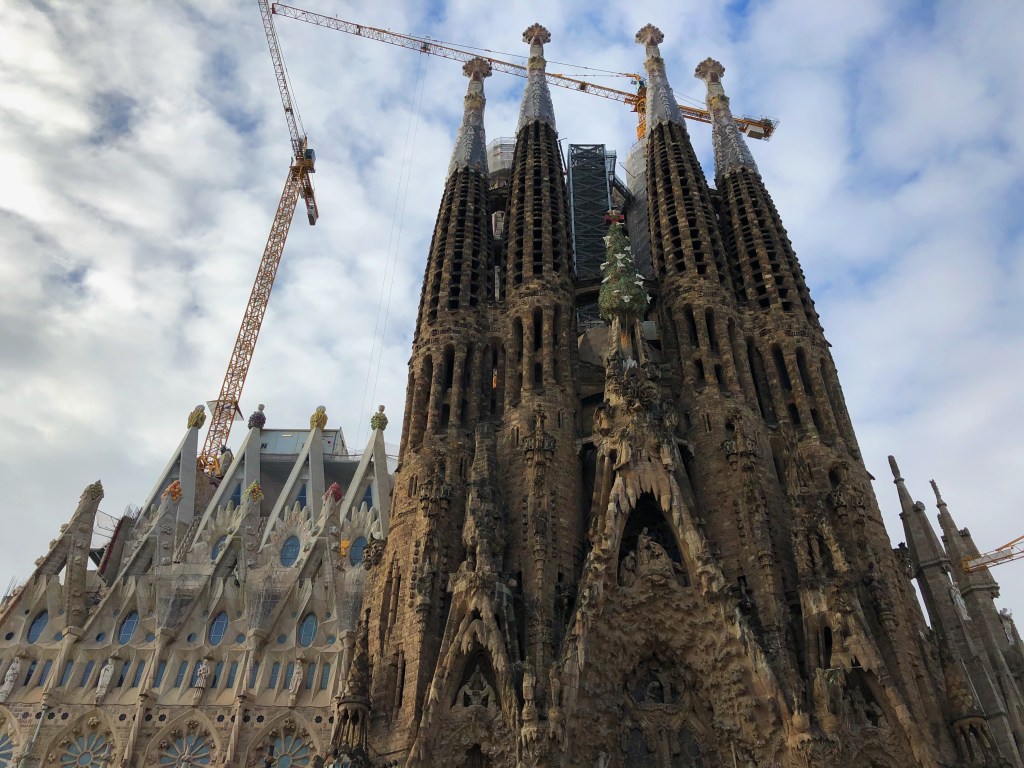
One of the most famous landmarks in Barcelona is La Sagrada Família. It was designed by Gaudí, the same architect that designed Park Güell. It is predicted that this basilica will be under construction until 2026.
As aforementioned, Gaudí is famous for his lack of use of straight lines in the buildings he designs. He is also known for his incorporation of natural and biblical influences in his structures.
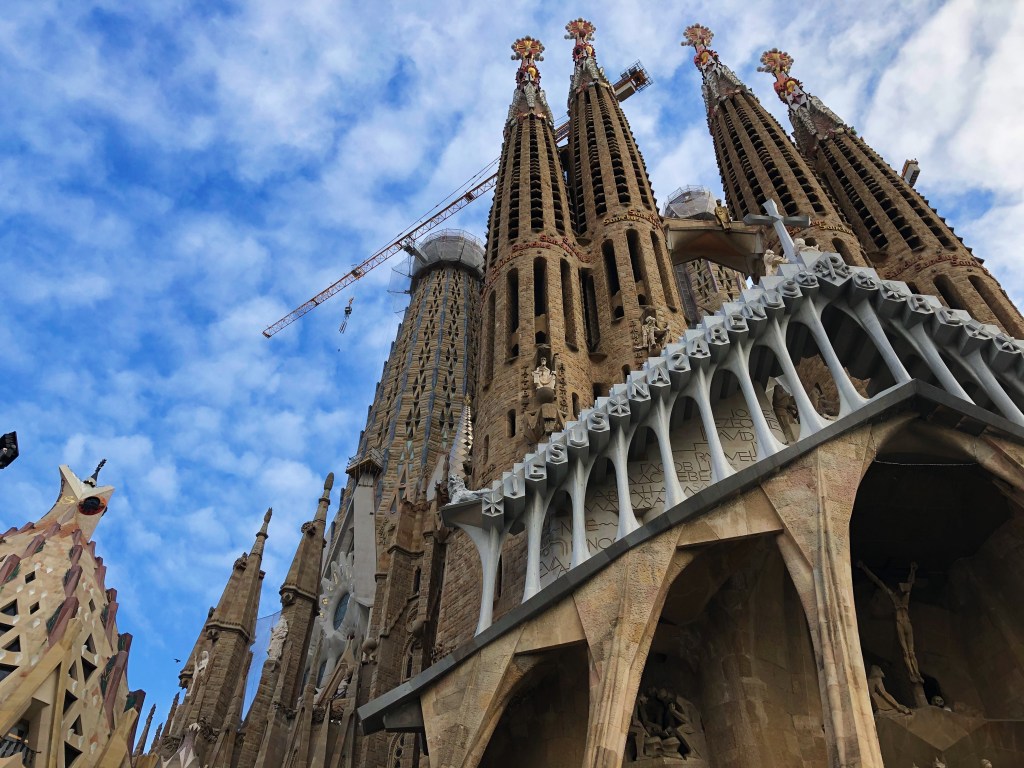
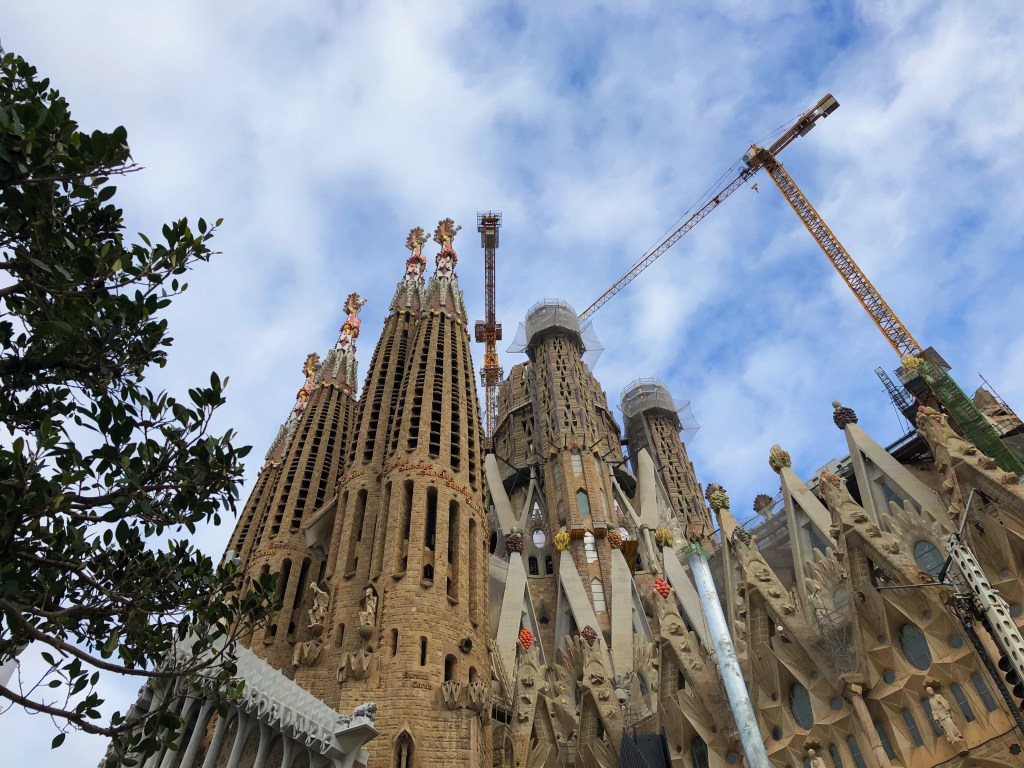
The photograph on the left shows the newer part of the basilica and highlights how Gaudí uses different, lighter stones towards the top of his structures, and darker stones towards the bottom to signify heaven and hell.
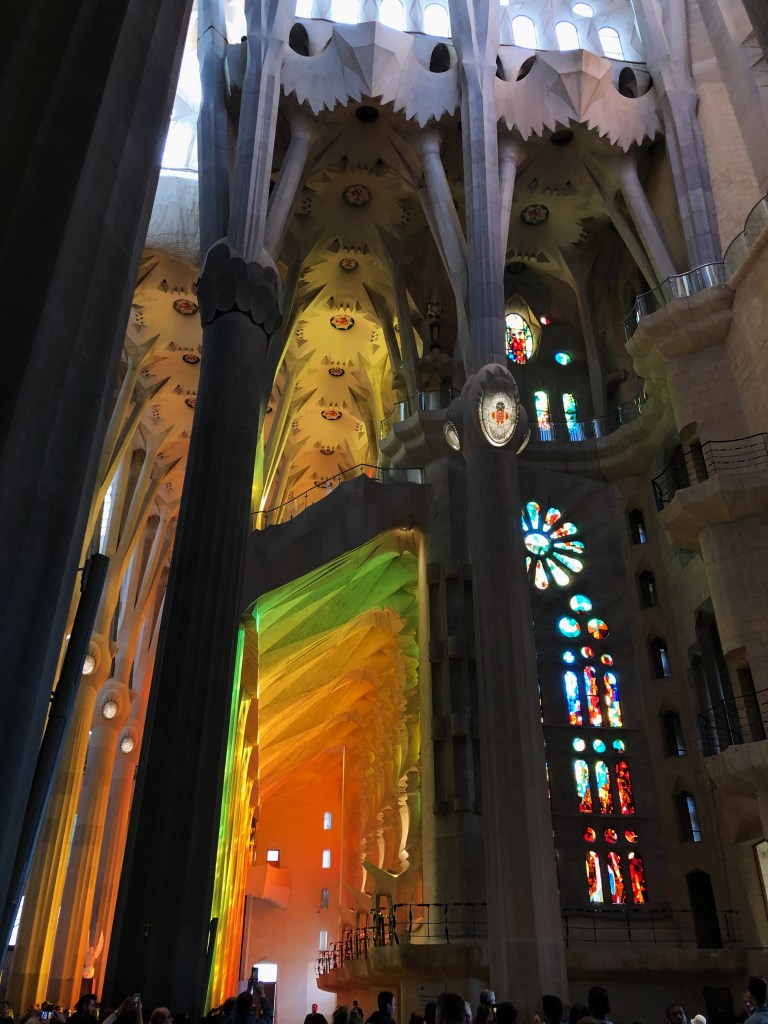
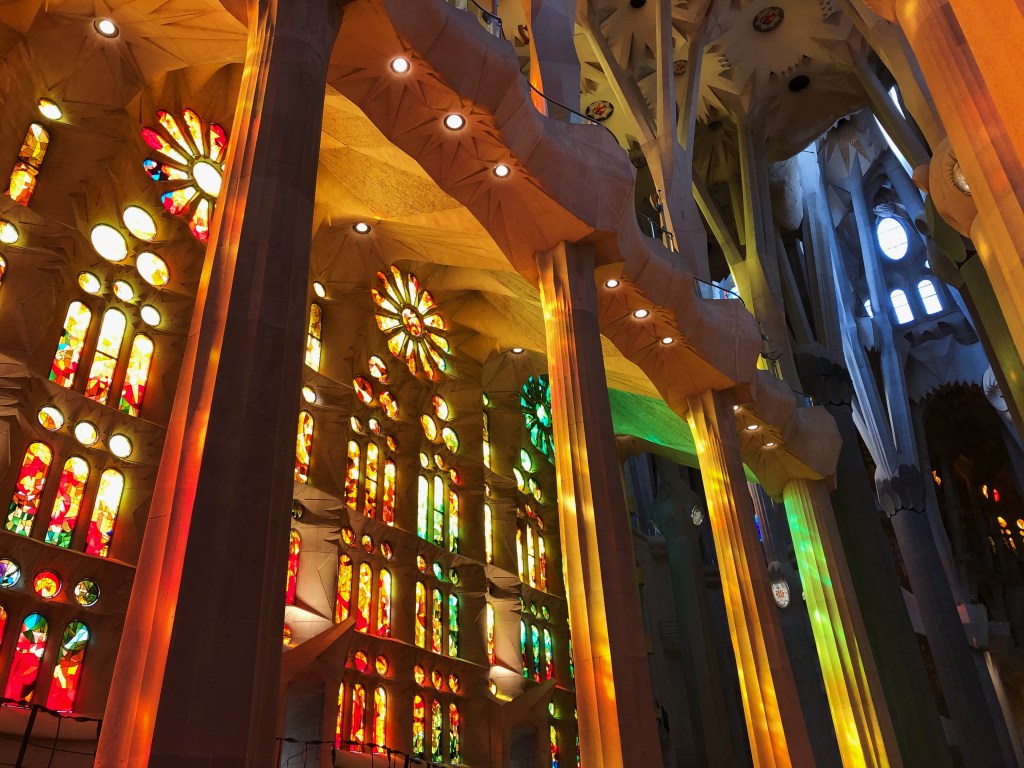
The walls of the basilica are lined with intricate stained glass. The side shown to the right is mostly warm colors and is illuminated at sunset. The wall directly across from it contains cool colored stained glass illuminating the nativity scene during sunrise.
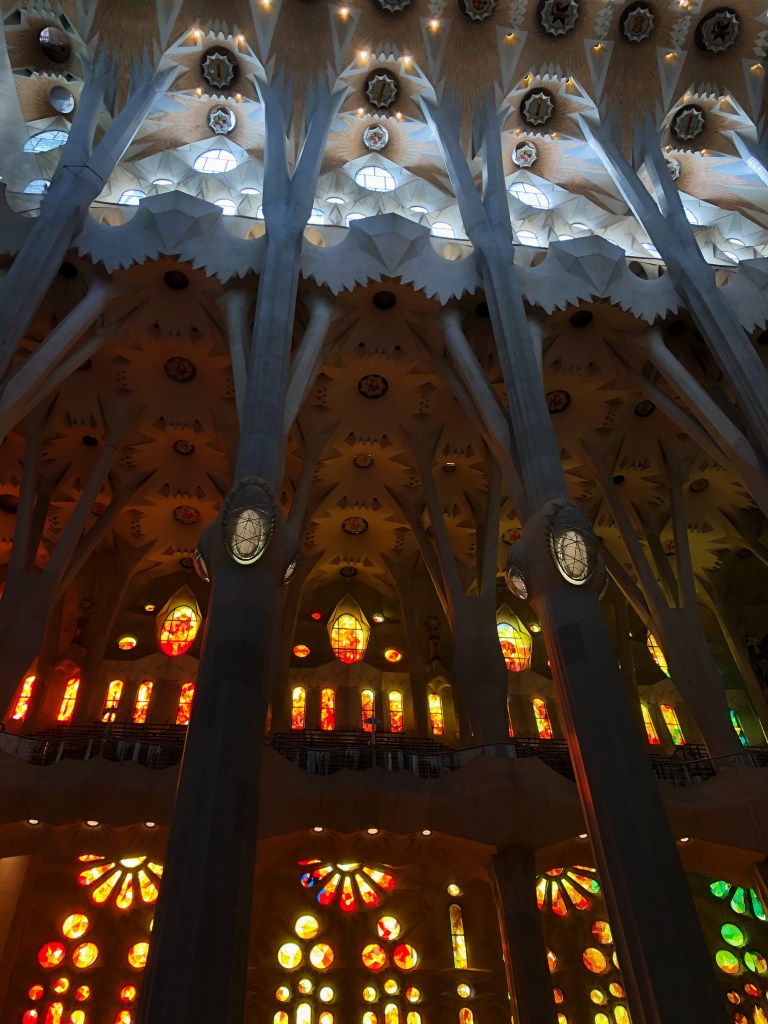
The pillars found throughout the cathedral not only support the towers above but were also designed to resemble trees (again, showing Gaudí’s love of nature)
This photograph is looking from the back of the church towards the altar.
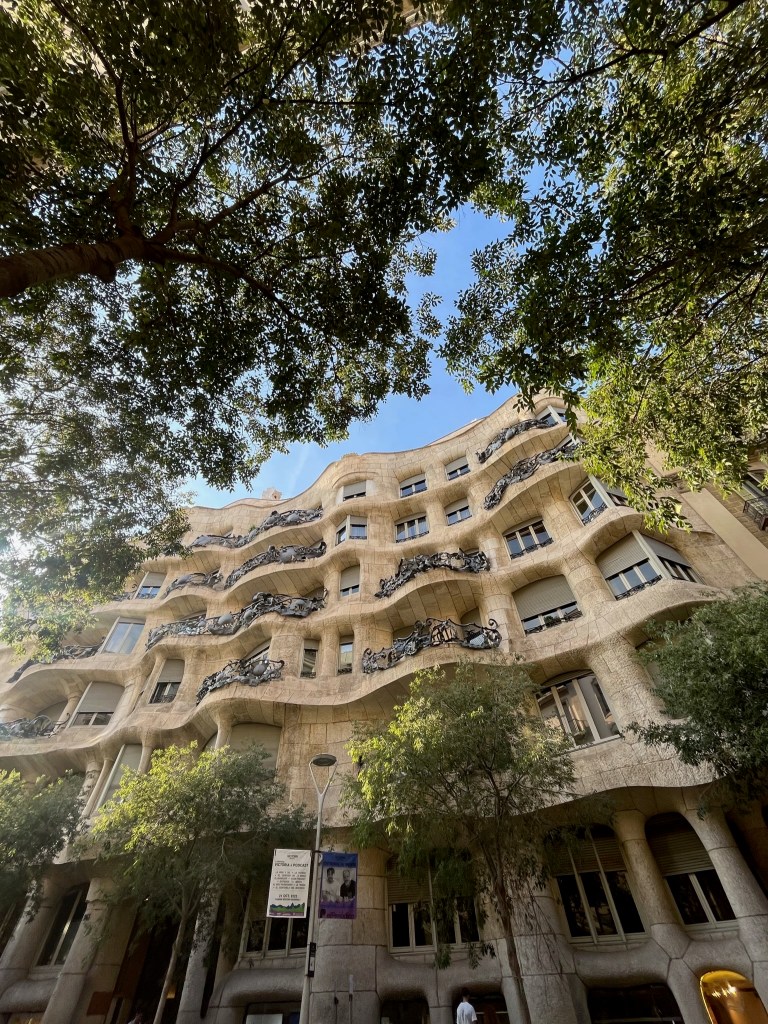
Casa Milà (commonly known as La Pedrera) is yet another Gaudí building in Barcelona, and a UNESCO World Heritage site.
Bunkers del Carmel is a common place where tourists and locals alike gather to watch the sun set on Barcelona.
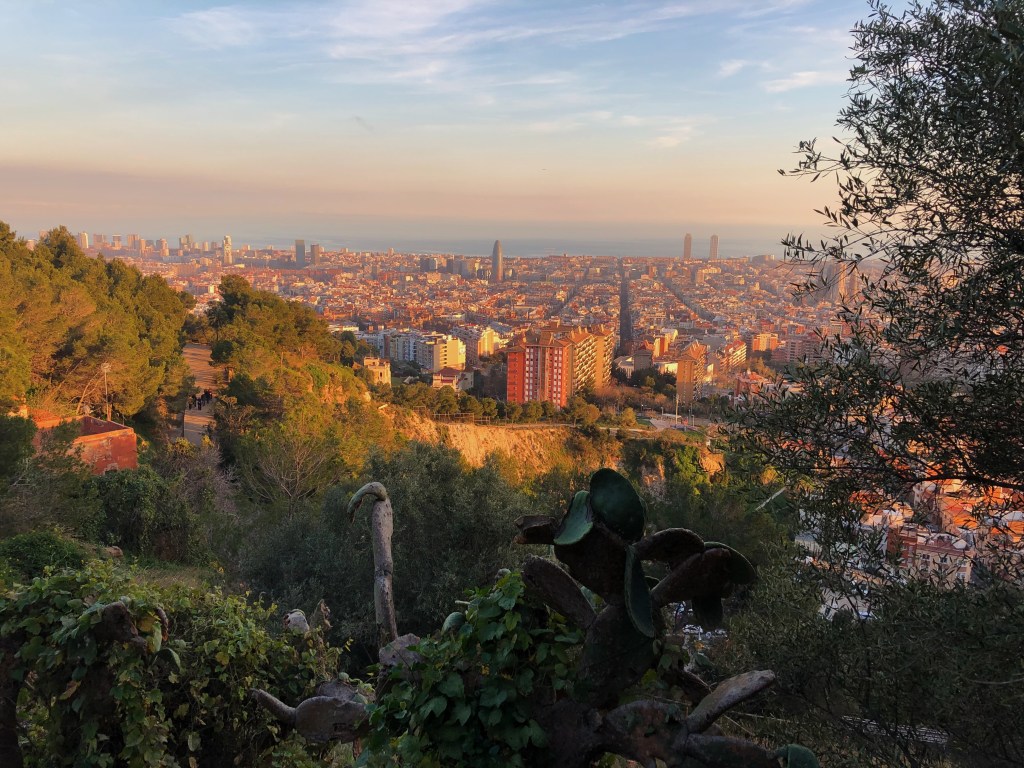
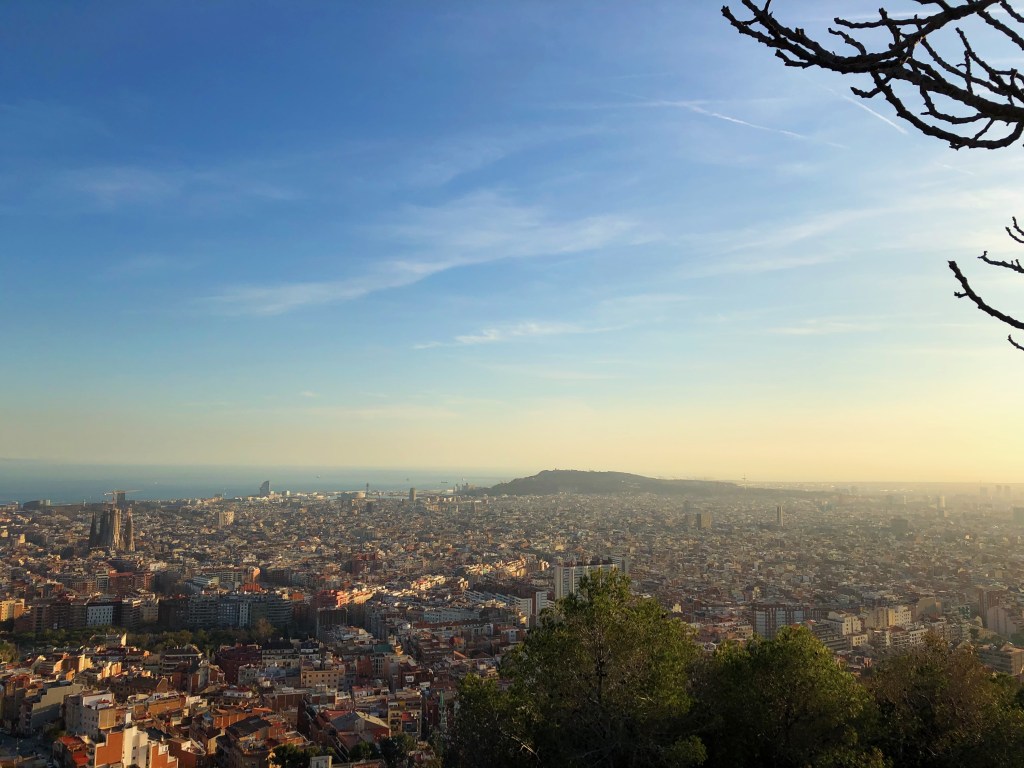
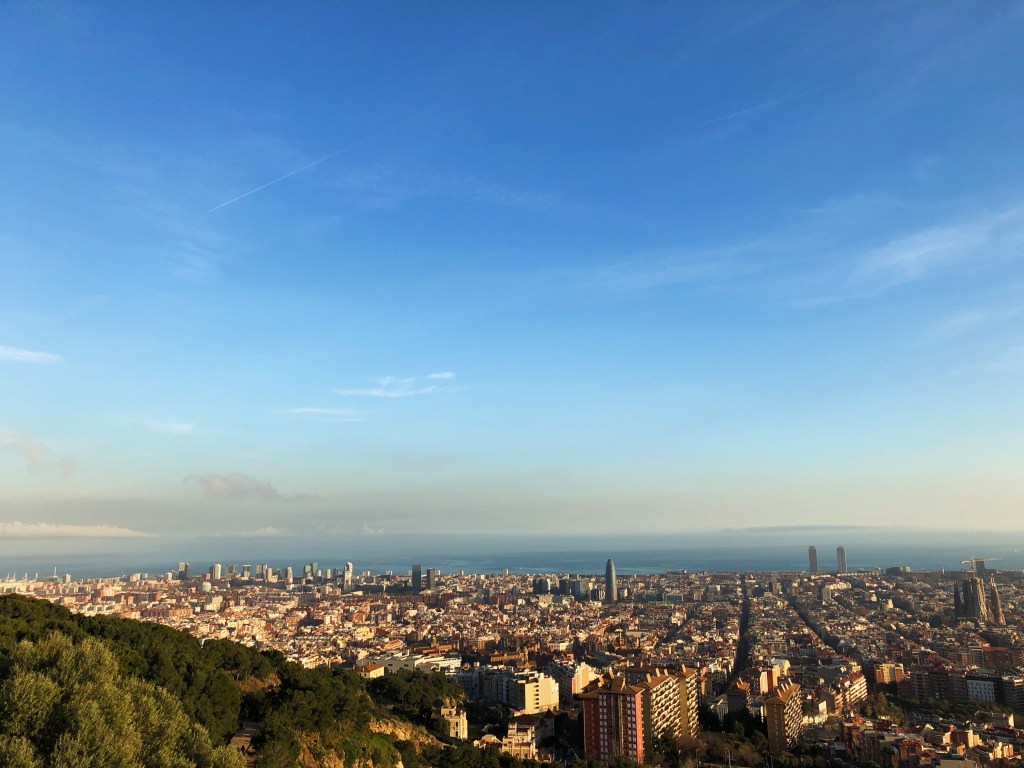
This amazing view spans the entire city of Barcelona. Landmarks are easily viewed from the Bunkers. The Sagrada Família can be seen on the left in this picture.
This photograph shows the division of the new and old parts of Barcelona. The newer parts of the city have a grid-like layout (closer to the mountain) whereas the older parts of the city have rather disorganized streets (closer to the water).
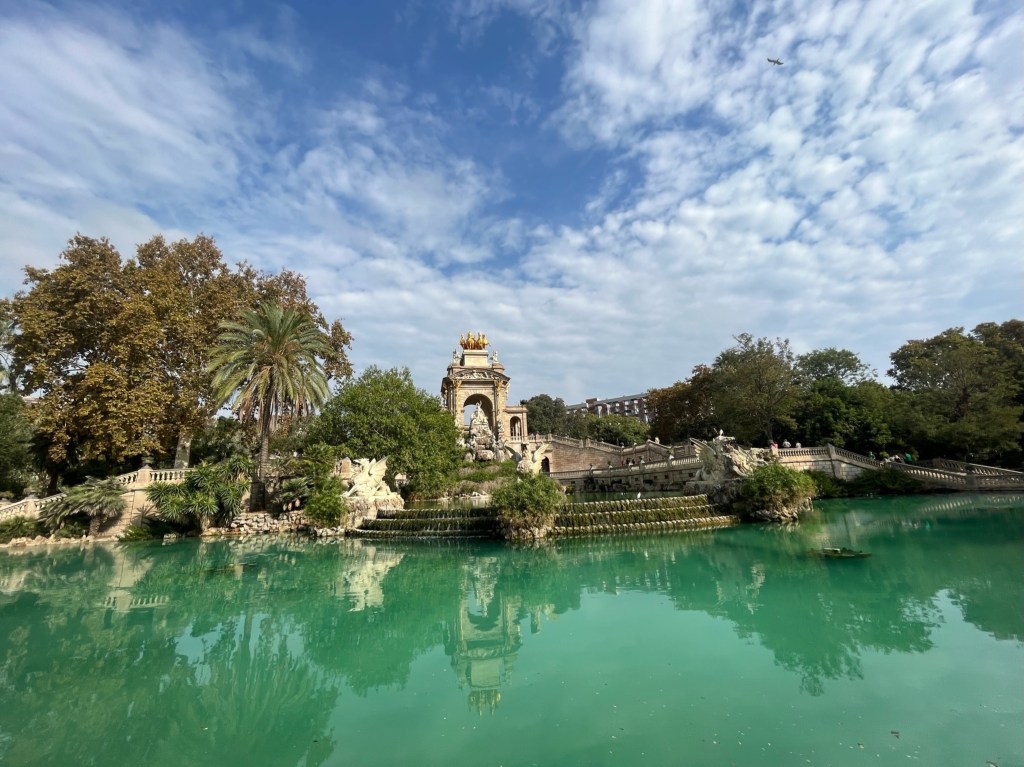
La Parc de la Ciutadella is another one of my favorite places in Barcelona. Much like Central Park in Manhattan, this park provides nature in the midst of the fast paced city. One of the days I visited this park, I saw an episode of the Spanish Netflix Series “Cable Girls” being filmed here!
Foods and Drinks
Catalonia is known for its cuisine. While it strictly abides to the classic Mediterranean Diet standards, there are a few aspects of cuisine that are unique to Barcelona- specifically its types of tapas. Tapas are appetizers that are usually served with drinks- the more drinks you order or the more expensive your drink is, the larger and more exquisite the tapas will be.
The Mediterranean Diet is rightfully praised for its exemplary effects on cardiac health and its sustainable sourcing and distribution- this is due to its locally and organically grown produce. The Mediterranean Diet, however, is often mistaken or misunderstood. Contrary to common belief, traditional mediterranean foods do not include tomato and are often pretty bland.
Because Barcelona is such a popular tourist destination, many of its restaurants offer cuisines from across the world. Here are some of my favorite places:
BREAKFAST
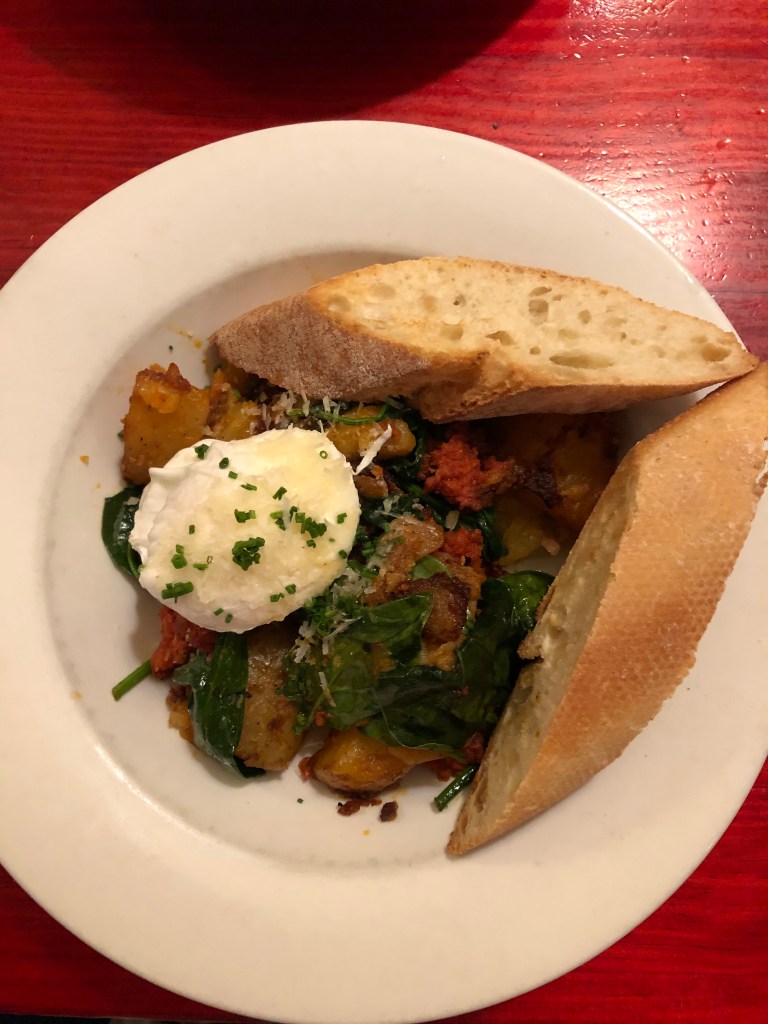
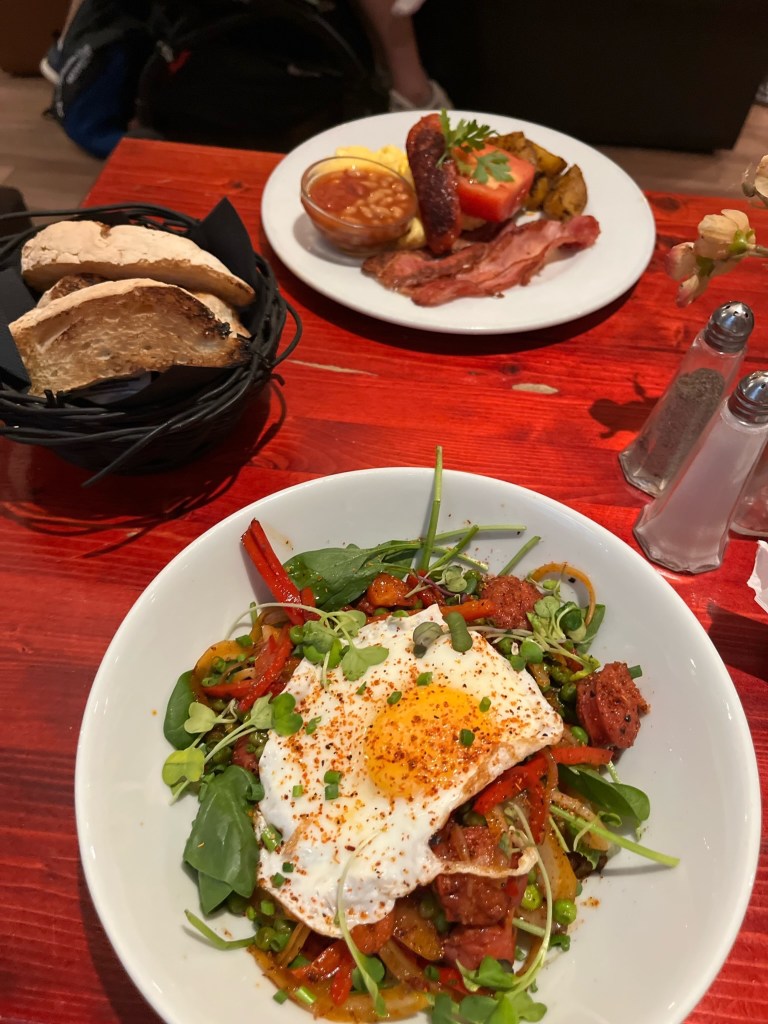
Milk- This restaurant is located at the edge of the Gothic Quarter and Barceloneta. It offers a large variety of sweet and savory breakfast foods. My favorite thing to order is the chorizo hash with a mimosa or bellini. Drew, in a classic Brit fashion, ordered an English breakfast complete with scrambled eggs, beans, bacon, tomatoes, and potatoes.
Brunch & Cake- This restaurant is a favorite among American tourists as it serves great American breakfast foods. I ordered avocado toast and a chai latte, but I personally like their sweets better (cinnamon buns, pancakes, etc).
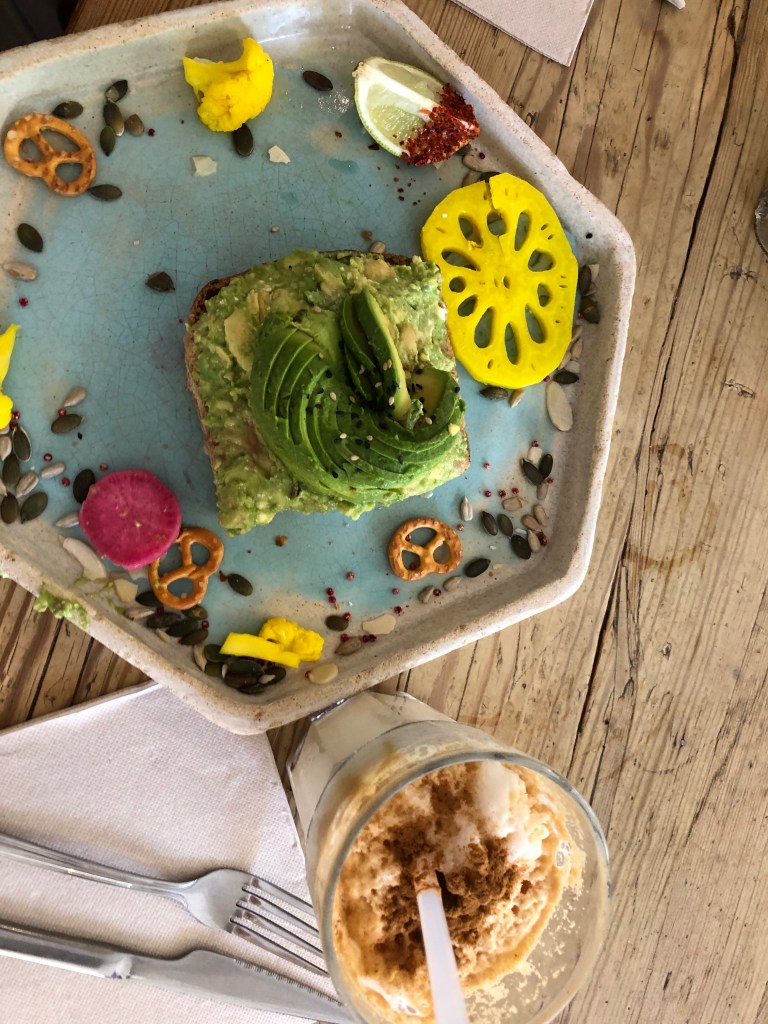
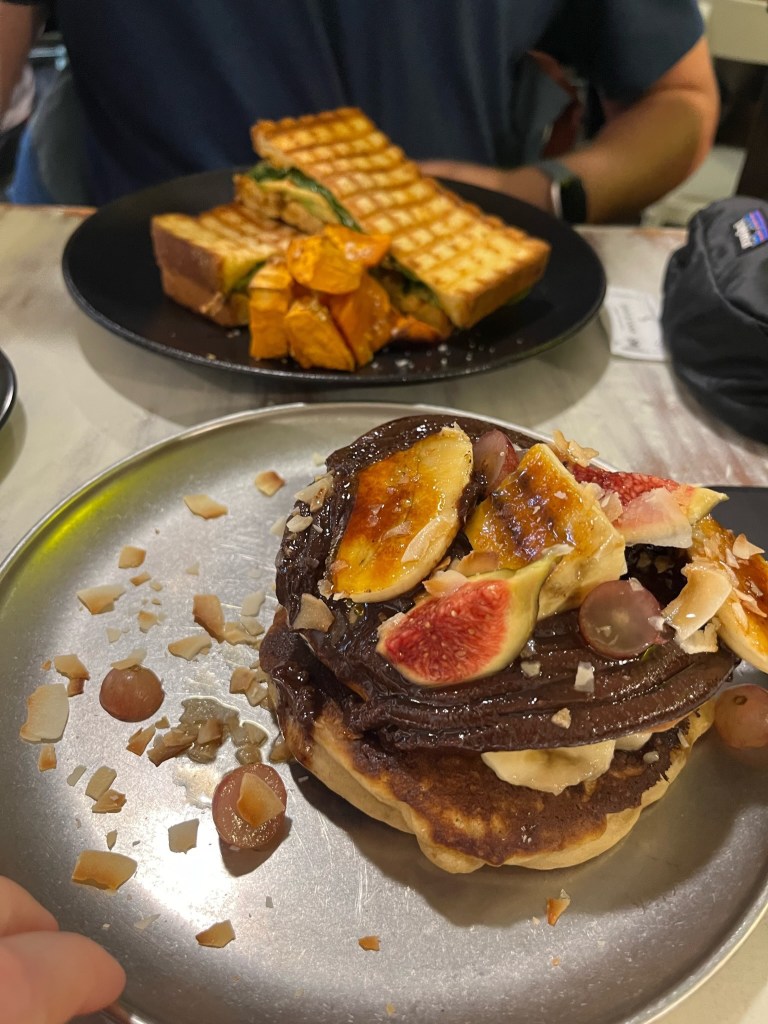
Nonna’s Brunch- This little cafe is right near the Barcelona Cathedral in the Gothic Quarter. Our chicken sandwich and banana and nutella pancakes were the perfect pick-me-up on our last rainy day in Barcelona.
DINNER
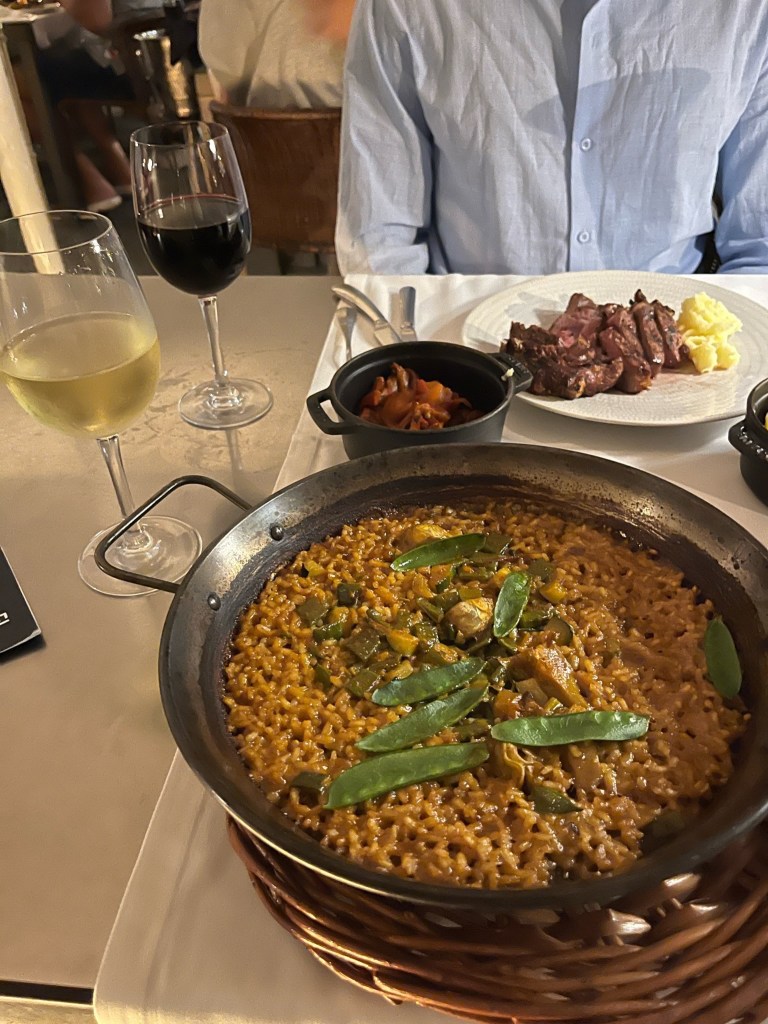
El Cercle- Located right off La Rambla, this restaurant is known for its amazing views and traditional Spanish cuisine. Their terrace that overlooks some busy pedestrian streets within El Barri Gòtic makes this one of my favorite spots to people watch. Here I have enjoyed many of their seafood dishes as well as a vegetable paella (even though the dish itself originated in Valencia, not Barcelona), and Drew loved their steak.
Da Greco (now closed)- This is an italian restaurant in the Gracia barrio. For students studying in Barcelona, its BYOB- this has been a lot of fun for my friends and I to test out what we have learned about pairings in our Food and Wine course. They serve huge portions here and also include a small dish of each person’s order so the rest of the group can taste it. (Fun fact: This is supposedly Beyonce’s favorite restaurant in Barcelona. She has a private table that others can reserve for 300 euro)
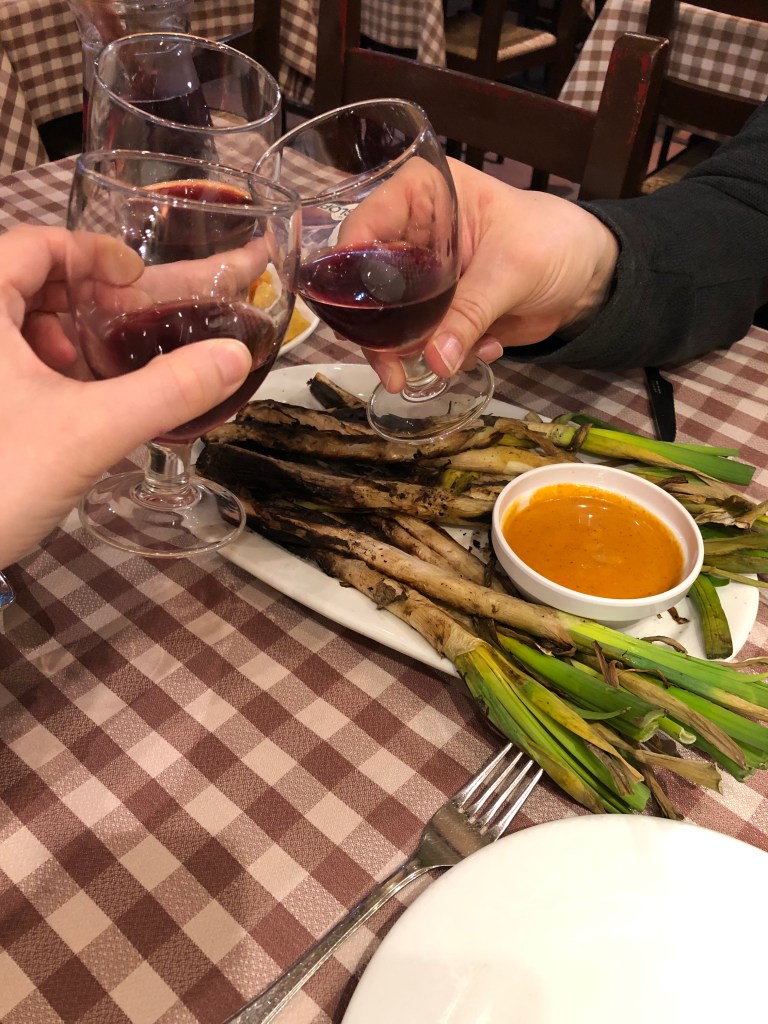
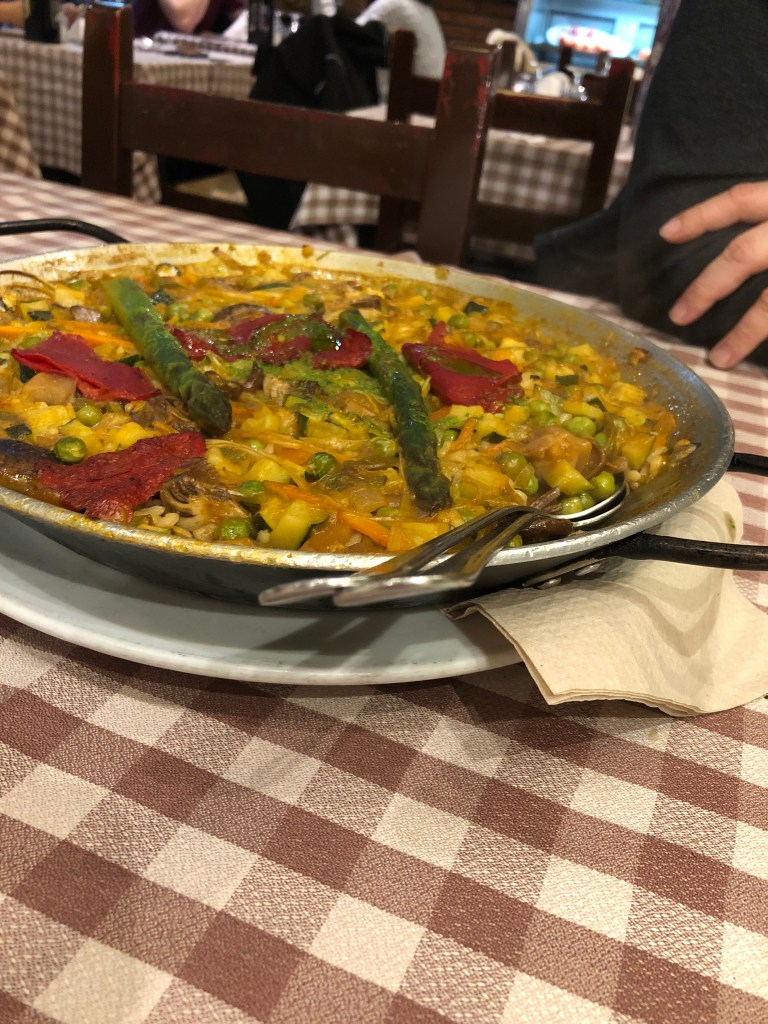
El Glop– This is a traditional spanish restaurant that is highly regarded for its tapas, paella, and sangria by tourists and locals alike. For tapas, I ordered patatas bravas and calçots (a seasonal tapa usually served in the winter or beginning of spring- green onions grilled and dipped in romesco sauce).
TAPAS AND DRINKS
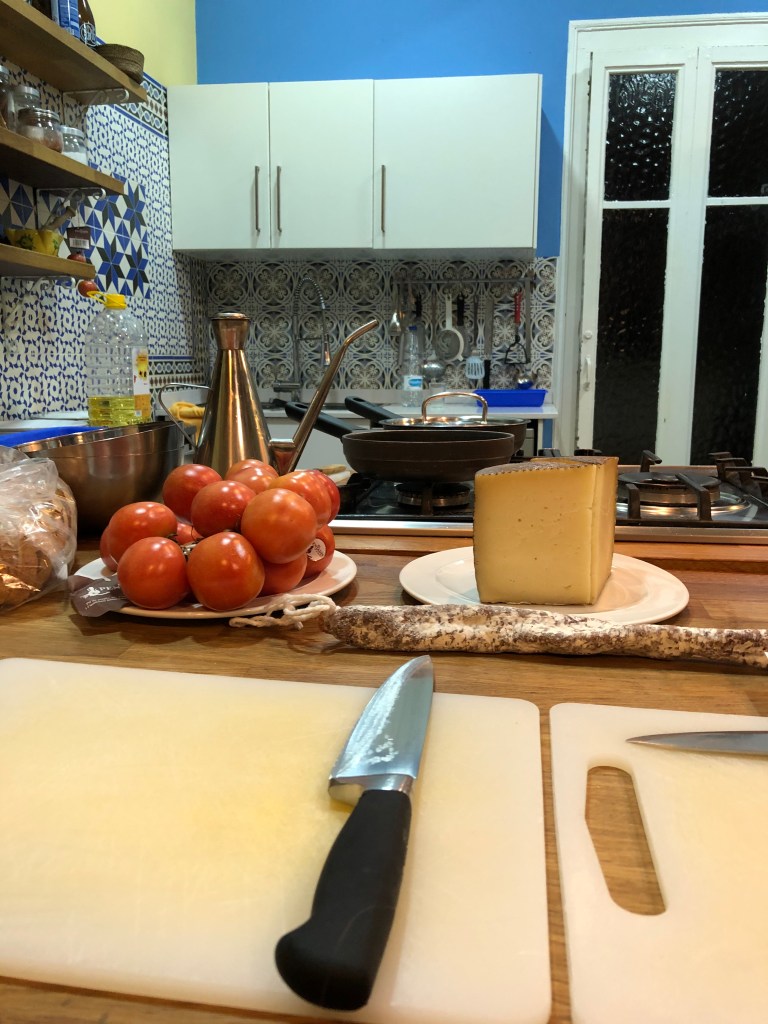
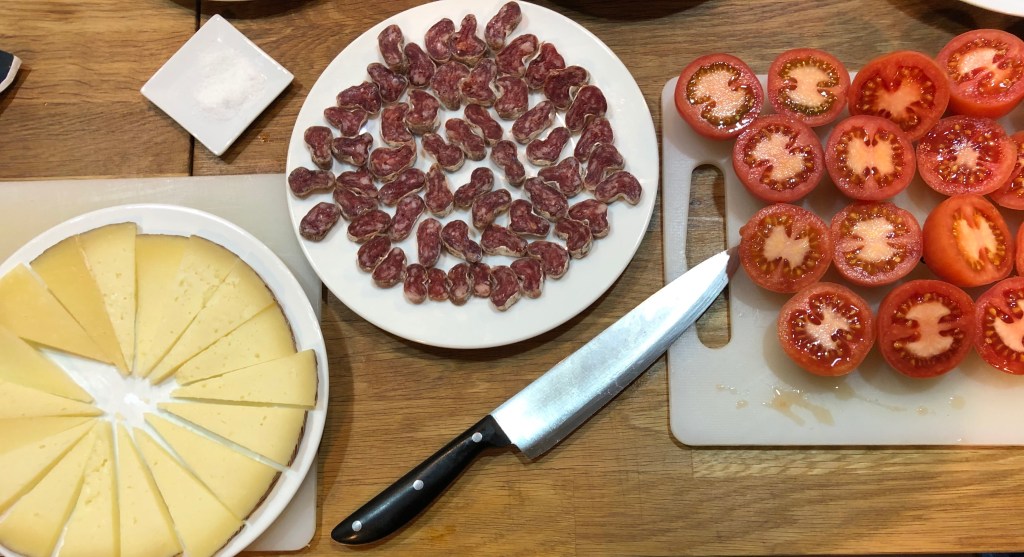
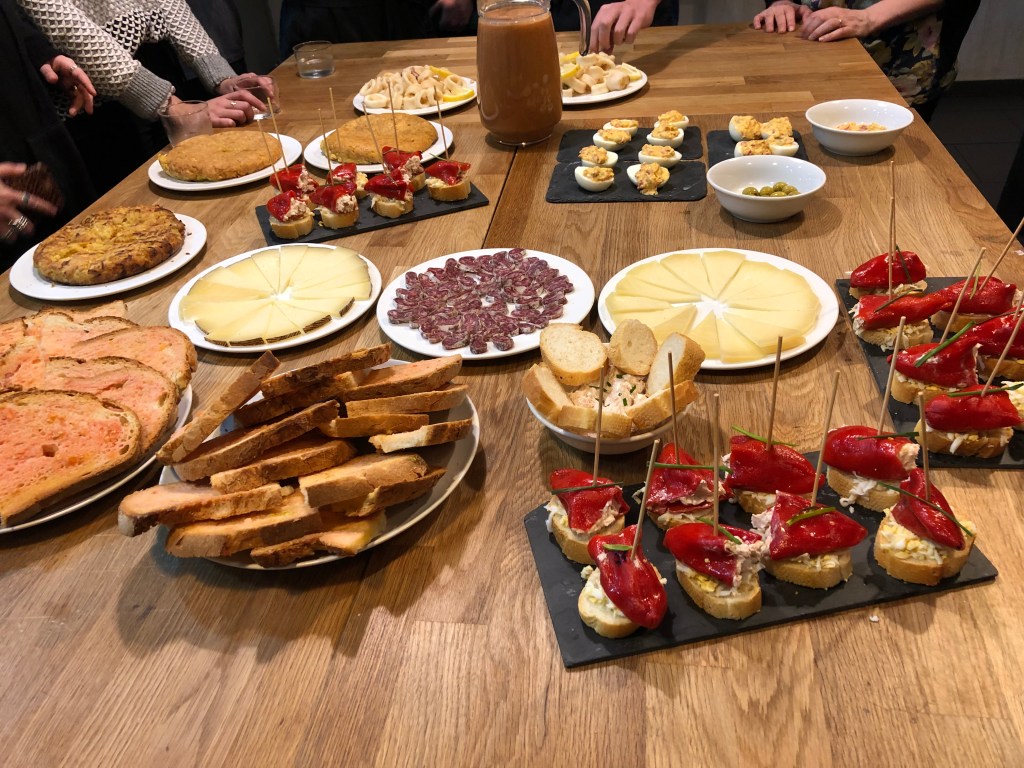
In one of my “field studies” in my food and wine course, we were assigned different tapas to make. All tapas that were assigned were traditional and specific to Barcelona. These pictures show the process of making my tapa, Pan con Tomate (Bread with Tomato).
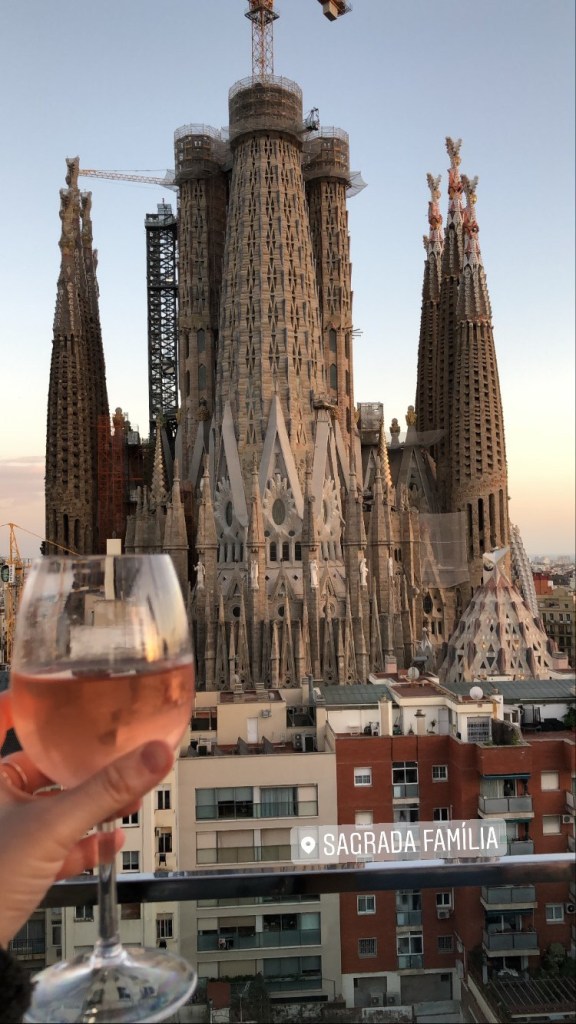
Ayre Hotel (now Secrotel Rosellon)- This hotel has a bar in its lobby where people (regardless of if they have a reservation at the hotel or not) can purchase a drink and enjoy their rooftop. This Hotel (pictured above) is located directly in front of La Sagrada Familia and offers amazing 360 degree views of the city.
El Nacional– This restaurant was recommended to me by my photography professor and truly lived up to his raving reviews. It has many sections of the restaurants, each with their own menu. I purchased patatas bravas, a spanish omelette, and pan con tomate, common tapas, and a local shandy here and loved it.
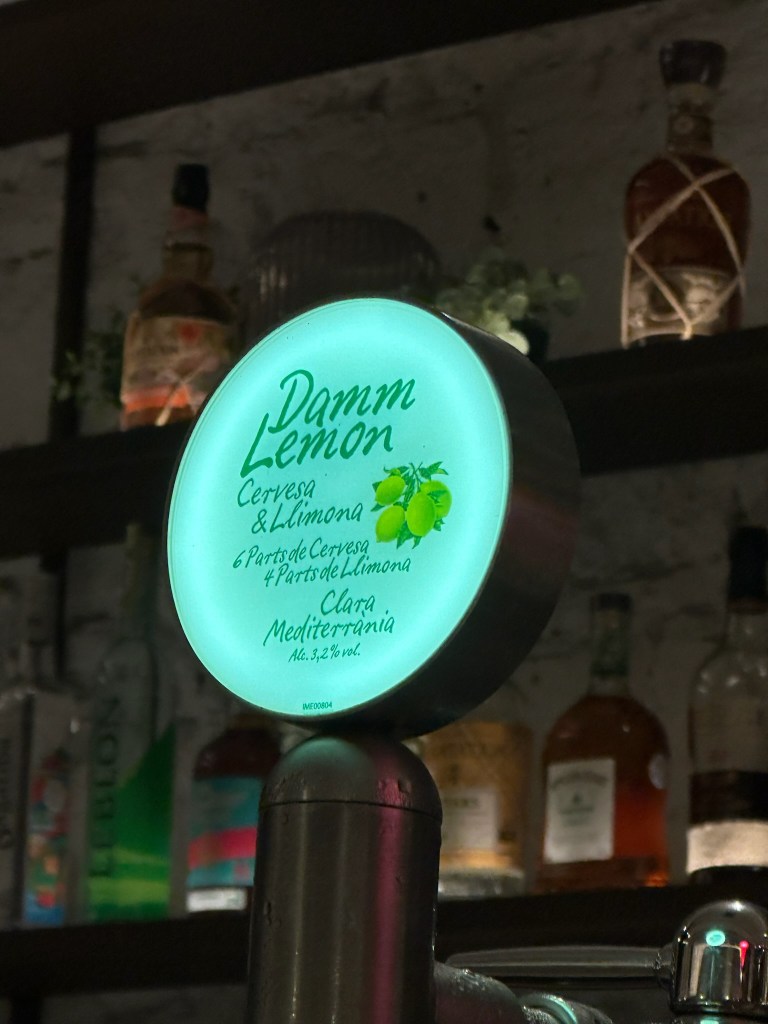
Damm Lemon- This beverage is similar to a shandy and quickly became one of Drew’s favorite ways to cool off after walking almost 20 miles around Barcelona during our trip
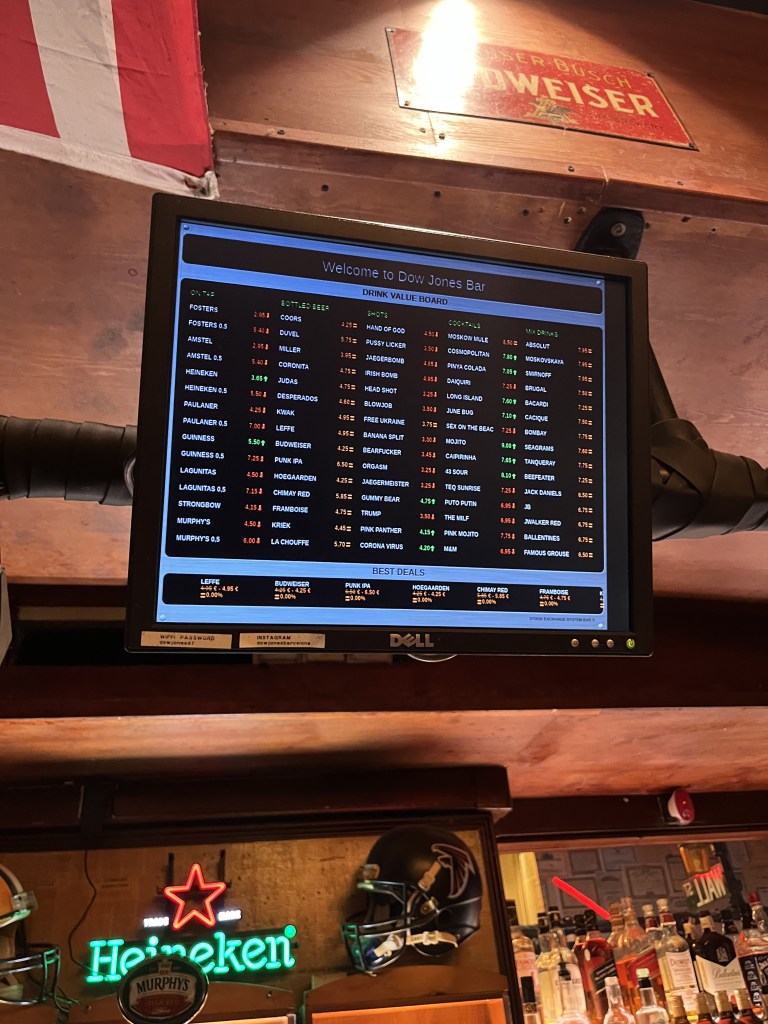
Dow Jones Bar- This is a common bar for American students studying abroad (particularly the finance bros). The drink prices are modeled after the US Stock Market and change depending on how popular that particular drink is. Every so often, the market will “crash” bringing drinks down to their base prices.
 About Abroad